



Eye Disorders/Surgery
With our state of the art quipment we can better diagnose eye disorders and make the appropriate corrections for your sight.
Normal Eye
The perfectly focusing eye is an emmetropic eye. Light enters the eye and is sharply focused on the retina. Nerves send the retinal images to the brain and this perfect eye system sees 20/20.
One of the most critical components of your eye is the cornea, the "window" of your eye. The job of the cornea is to bend, or refract, light rays so that they focus on the retina at the back of your eye. Refractive errors occur when the cornea fails to focus light rays precisely on the retina.
Myopia
You may be familiar with the term myopia, also known as near-sightedness. Myopia is the result of an eyeball which is too long, or a cornea which is too curved. In both cases, light rays entering your eye fall short of the retina, and objects in the distance appear blurred. If you have this condition, you are not alone; more than 70 million people in North America have myopia.
Hyperopia
Astigmatism
Presbyopia
Glaucoma
Glaucoma is an eye disease caused by increased pressure in the eye that can destroy the sensitive nerve fibers responsible for vision. Usually there are no symptoms related to this disease. It affects approximately 2% of the population over the age of 35.
Many individuals are at a higher risk to develop Glaucoma. Glaucoma is most common in people with a family history of the disease. Patients with systematic disease such as diabetes, anemia, or hardening of the arteries are at higher risk of developing glaucoma. Nearsighted patients are more likely to develop the disease. African-Americans tend to develop glaucoma more often than other racial groups.
Cataract
The eye's natural lens is used for focusing near objects and is clear at birth. As we age, the lens begins to lose its clarity. This loss of transparency of the natural lens is called a cataract. A cataract decreases the amount of light that is focused on the retina, resulting in an overall blurriness of images. Having a cataract disturbs vision much like looking through a dirty windshield.
Cataracts are not caused by over using the eyes. The computer has no effect on cataract development. Cataracts progress more quickly with exposure to ultraviolet radiation and cigarette smoking. Recent studies have shown that some vitamins, such as vitamin C may play a role in slowing down the development of cataracts.
Other than the normal aging process cataracts can develop as a result of injury, systematic diseases, and certain drugs such as steriods.
Retinal Detachment
The retina is the thin, light sensitive, lining of the eye. The optic nerve sends the retinal image to the brain where vision occurs. Occasionally, the retina becomes torn and detaches from the internal portion of the eye causing reduced vision, floaters and sometimes flashes of light.
If you experience any of these symptoms, you should contact Dr.Holbert's office immediately. Retinal detachments are most common in near-sighted individuals. They can also occur after blunt head trauma such as automobile accidents, sporting events or falls. Family history is also a contributing factor.
Vision Correction for Nearsightedness
Nearsightedness is a condition where the eye has too much focusing power for its length. Nearsighted correction procedures decrease the focusing power of the eye by slightly flattening the surface of the cornea.
LASIK
LASIK - focuses a nearsighted eye by flattening the curvature of the cornea. This change reduces the focusing power of the eye, decreasing the too-powerful nearsighted focus and improving vision.
The cornea is a natural lens that is located in the front part of the eye and is responsible for 75% of the eyes refractive power. For this reason, the cornea is the structure of the eye where most refractive procedures take place. By changing the corneas curvature the myopia can be corrected.
LASIK flattens the eye without incisions (like RK) and without destroying the eye's delicate surface (like PRK). It does this by removing tissue from the corneal thickness, after the surface is lifted away from the area. The surface is replaced at the end of the procedure, unharmed.
The first step in LASIK is to create the surface flap. This is done with an instrument called a keratome, which is similar to a carpenter's plane in design - it creates a thin layer of the eye's surface which is set aside, and replaced at the end of the procedure. The keratome creates a very precise and smooth surface flap - so smooth, in fact, that it heals back into place in hours after the procedure, without sutures.
The device used is called a microkeratome. With it (as in ALK), the doctor slices the cornea from the side, producing a flap. A part of the device flattens the cornea during the slice, so as to create a flap of uniform thickness. It is at this stage of the procedure that the doctor must exercise extreme precision and caution to create a perfect flap.
The second step in LASIK is performed with the excimer laser. The excimer laser is a very precise laser, it is able to remove tissue from the cornea with sub-micron accuracy. (A single ply of tissue paper is about 75 microns thick. The excimer removes tissue in 1/4 micron steps). Using the excimer to remove the second layer greatly improves the accuracy of the procedure. The shape of the pattern used determines the correction that will be made. For farsightedness, tissue removed around the edges of the cornea, leaving a central "mountain" that effectively increases the eye's curvature.
The flap is lifted to make room for the Laser Beam
The final step in LASIK is to replace the surface layer, or "flap". As we mentioned, the flap heals in place without sutures, it just sticks down by natural adhesion. The surface heals over in just a few hours, explaining the remarkable comfort of the LASIK procedure. The cornea is folded back and re-attaches itself in a matter of minutes.
Because healing is very rapid, functional vision is usually achieved by the first postoperative day. After only a few days, there is no trace of scarring in the cornea. LASIK can be used to correct nearsightedness, farsightedness, or astigmatism. In each of these procedures, the laser is used to reshape the cornea to improve the focus of the eye.
The laser will emit a series of fast pulses.
PRK (Photorefractive Keratoplasty)
PRK (Photorefractive Keratoplasty) was the first way the excimer laser was used in refractive surgery. In PRK, the cornea is flattened by removing tissue with the laser, but (unlike with LASIK) the tissue that is removed includes the surface layer. Although the eye heals the surface after PRK, we have learned over time that the surface of the cornea contains elements for that are critical for stable vision. This is especially true in eyes with larger amounts of correction, in which PRK removes a deeper resection of tissue. In these eyes, visual stability can take years to achieve.
The surface cells are wiped off with a special spatula from the front part of the Human Eye
The reason for the instability is that the eye tries to fill in the surface defect created by the laser in the process called remodeling. With LASIK, where the surface is never violated, the tendency for remodeling is greatly reduced. For that reason, LASIK has largely replaced PRK in most centers offering refractive surgery. While there are sometimes situations where PRK is still used (especially in low corrections), LASIK is considered the State-of-the-Art treatment using the excimer laser today.
RADIAL KERATOTOMY (RK)
RADIAL KERATOTOMY (RK) is the oldest of the modern refractive procedures. Over 1 million RK procedures have been performed in North America since the late 1970s. RK corrects mild forms of nearsightedness. It works by flattening the eye using a spoke-like (radial) pattern of incisions in the front surface of the cornea.
Because RK has been around so long, there is a wealth of knowledge about its limitations and potential complications. One major concern about RK is the weakening effect of the radial incisions on the strength of the eye, which makes the eye more susceptible to rupture in the event of an injury. Another concern is that eyes with radial keratotomy can experience progressive flattening, making them farsighted over time. This instability, called progressive hyperopia, was usually seen in eyes undergoing larger amounts of correction - something which is avoided today, through the use of other procedures for these eyes, such as LASIK.
ALK (Automated Lamellar Keratoplasty)
ALK (Automated Lamellar Keratoplasty) for nearsightedness - is a procedure that has been replaced by LASIK in recent years. ALK corrects nearsightedness by removing a thin layer of tissue from the cornea to flatten the eye's surface. Unlike RK, which flattens the eye by making incisions into the surface, ALK actually removes a thin disk from the cornea, leaving it thinner and flatter than it originally was.
ALK is performed in two steps. Both steps utilize an instrument that is much like a carpenter's plane in design (although much refined), called a keratome. In the first step, a flap of corneal surface tissue is reflected aside, to expose the main thickness of the cornea. Then, a second pass of the keratome is made to remove tissue, flattening the eye to improve the focus. The original surface is then replaced, and allowed to heal.
ALK has the advantage of leaving the corneal strength intact, unlike RK. Also, ALK heals very quickly and with relative comfort. The disadvantage of ALK is that it is not nearly as accurate as the excimer laser for the tissue removal step, so multiple procedures are sometimes needed to achieve the final correction.

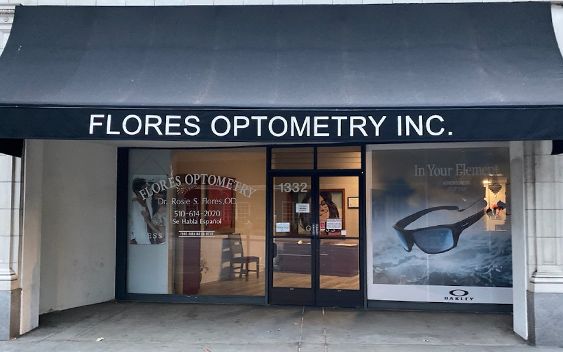
Flores Optometry, Inc.
1332 E. 14th Street
San Leandro, CA 94577
(510) 614-2020
Office Hours
Sunday- Closed
Monday- Closed
Tuesday- 9-6
Wednesday- 9-6
Thursday- 9-6
Friday- 9-6
Saturday - By Appointment